I’ve Branded Myself

And baby it burns.

Earlier this year I signed up for a BrandYourself account and I let this website do a web search of my personal information. On my initial scan my online privacy risk was scored as high, which was pretty frightening. I recently did another scan to see what has happened in the past few months and the results were equally shocking … I was high, again!
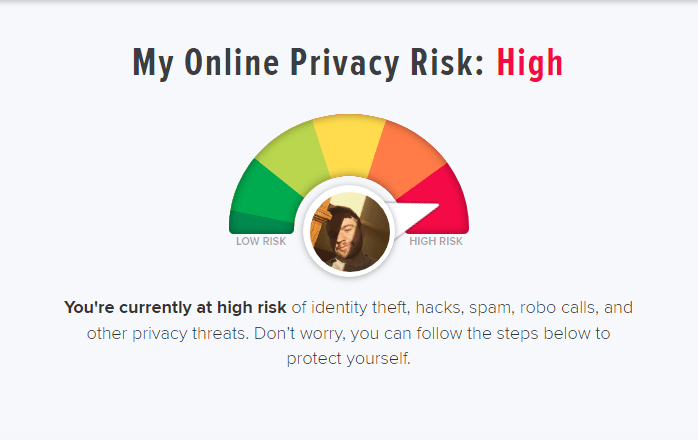
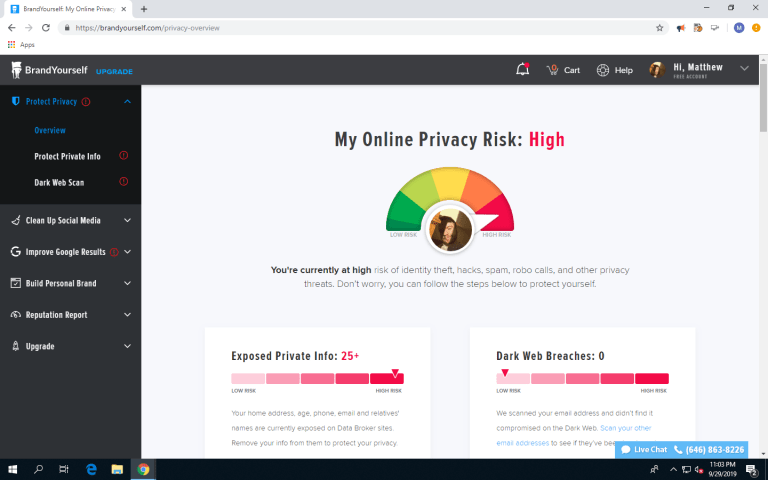
New capture.
Old capture.

When I first got my brand identity scanned, BrandYourself gave me a few tips and tricks to lower my score and these tricks were conveniently a subscription away from being fixed. I was cynical at first – c’mon, really? Of course there is a premium cost to fixing my presence online. However, BrandYourself does give you a slight glimpse of what you could delete off your social media.

It’s actually quite impressive how this website can flag posts for alcoholic content in your photos, among other things such as nudity, drugs, weapons, and “lewd gestures”. I saw about five posts that I could delete but the rest were blurred. I went ahead and deleted these five posts, but the fact I had hundreds of blurred posts almost drove me mad.

Look – I get it. Profanity can be trashy. I can drop the F bomb on Facebook and people may think I’m not articulate or intelligent. Potential jobs certainly wouldn’t be a fan of it, either. However, I feel like it’s not as crushing as other posts such as ones with alcohol, nudes, and other provocative things. I honestly didn’t delete many photos with profanity because for most of them I am talking about real issues such as laws, regulations, abortion, gay marriage, etc. It’s not like I’m saying “I was fucking wasted last weekend” – it’s more of a “Get your fucking act together, Washington”. One could argue that both of these statements are equally bad, but I just don’t agree with that.

In short, I did not delete many posts and because of that I am not surprised that my score is still at high risk. While I may sound stubborn, I honestly do believe that my online brand definitely needs a bit of renovating. I probably have a few bombshell posts that could ruin my professional career before it even starts. I think I have a couple inactive Twitter accounts that were created when I was in middle school and high school which could be easily deleted, erasing a big chunk of my online presence. This could improve my score no doubt.

I think going forward I need to be very conscious about what I post, especially since I’m nearing the end of my academic career and will need to apply for big boy jobs. I should lay off the profanity and save it for a post with a punch: make it iconic.

For now I will be left wondering if a subscription to BrandYourself would save my online image. For those wondering too, don’t fear: if I come into an unreasonably large sum of money I shall pay for the subscription and we can learn together if we can save this mess that we call my life.
Yeah Sure, Let’s Collab! (Bc Our Boss Said So)

It’s a matter of fact that no matter what career field you pursue you will need to collaborate with a peer at some point. Yes, you will have to crawl out of that shell and let down that guard! You will have to talk to this person and you will need to create something beautiful that will ultimately somehow (hopefully) make the company money. Because that’s how life is, right? If everything was made up of individual decisions and projects the world would be a bit one-sided and the economy would probably be pretty terrible.

Lucky for us, in this age collaboration can be done from opposite ends of the country, from continent to continent, and even in the same room (the more traditional route, of course). Technology has made this easier than ever to share ideas to create an efficient and successful project. First it started with telephones, then video calls, then Google Docs, and now we have virtual reality meeting rooms. There really is no excuse nowadays to say you never got the memo (thank you, read receipts) or that there was a delay of information. I think this has in turn given employees increased accountability.

This is a jarring juxtaposition of what it was like to collaborate with your coworkers, let’s say, in the 1950s … seventy years ago (yes, the 50s were seventy years ago). Benjamin F. Jones, Professor of Strategy from Kellogg Innovation and Entrepreneurship Initiative, puts it as this:

“In everything, teams beat solo,” Jones says. “In the 1950s and 60s, in lots of fields, solo beat teams. It’s flipped. Now teams always have a higher home-run probability than solo.”

https://insight.kellogg.northwestern.edu/article/the-science-behind-the-growing-importance-of-collaboration

Collaboration today is all about teams, committees, special task forces, etc. Scientists started to see in the 50s that collaboration within companies produced better quality outputs and was more efficient, too. However, this idea wasn’t entirely foreign in the 50s. Even in the early 1900s in the days of Henry Ford, the assembly line was invented and drastically changed production speed and efficiency. While I’m not an expert why that mentality didn’t translate to the “corporate” level, as in marketing, accounting, finance, etc., we began to see a shift starting in the 50s towards using teams based on specialized skills, common factors, etc.

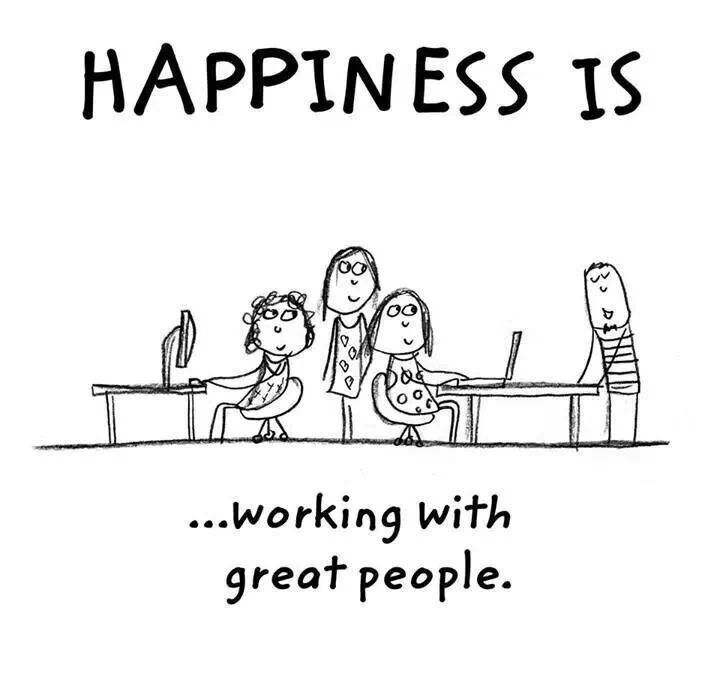
https://www.pinterest.com/pin/369928556880616520/

And I believe that collaboration in the workforce can improve the morale at work. It’s a great way to form and maintain relationships built on trust and accountability. It can suck when someone doesn’t pull their weight, so I guess it’s not always roses and daisies; but when you find the right team, working can be fun sometimes. I think companies recognize that. I remember when I traveled to San Francisco and I stayed right downtown across from Twitter Headquarters. I was able to see the rooftop, which was grassy and featured some outdoor games and plenty of tables. I would see groups of people sitting at these tables with their laptops and phones, sometimes with food. I could only imagine what it’s like to be in their shoes working for a massive influential company that gives them an opportunity to work on the rooftop of a bustling city. I thought it looked fun!

I think collaboration in 2019, especially with the technology that can be utilized, can be a driving force for employers. People especially in Ad/PR want to work in a technologically advanced workforce. Companies can use this appeal to bring in highly motivated and determined employees; this way, they are more apt to collaborate efficiently and bring good ideas to the table.

The fact of the matter is that collaboration is as essential as ever in the workforce. Technology has made this easier than ever, but it still falls on the individual to control their contribution. When a team works well together there is bliss; when they don’t, it can be chaotic. One thing is for certain though: collaboration is not going anywhere anytime soon, so it’s best to learn how to work with others before you start your first big boy job.

I Am Visually Captivating: See Photo

According to Forbes, we see around 4,000 to 10,000 advertisements a day. That’s a lot of information being thrown in our faces. And as we all know, we want to read as little as possible to get to the point — which is why images and video are so powerful to get a message across. It doesn’t seem right, though: how can we see up to 10,000 images a day? That seems like a lot of pictures.

And that study mentioned in Forbes wasn’t centered around people in metropolitan areas. This is the ‘average American’ we are talking about: you and I. In today’s age we are so used to filtering information out as we prioritize multitasking and efficient modes of thinking and doing. We are quick to filter out what is useless to us — like a sale going on at Hollister — and what is important — like a sale at Cracker Barrel. With how fast we are at filtering what we want to see, it’s important for advertisers to find something captivating and eye-popping to get our attention.

Images have always been important in advertising, but even more so in today’s age. Advertisements in the early 1900s were primarily text based with no color in images printed on newspapers, journals, or magazines. This wasn’t a bother and was a norm since society was dependent on reading the newspaper to get their news, other than radio. The mid 1900s saw a shift of news coverage and entertainment when the television invaded the American household. It wasn’t until the invention of the worldwide web when the world saw its next monumental change in how we receive information. Amid all these changes, one thing stayed the same: the dependence on visuals.

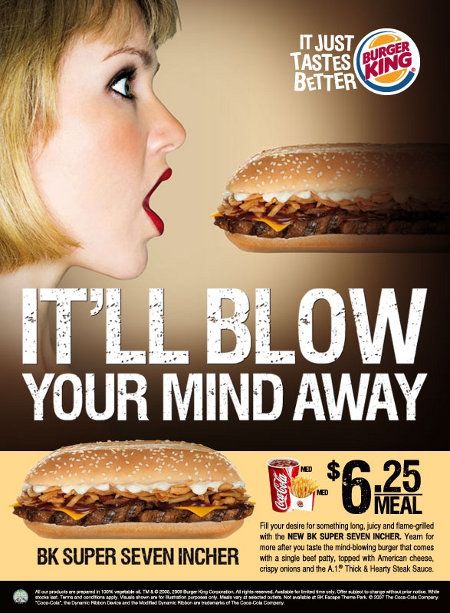
What I think has changed the most with images is our tolerance to their content. From pin-up girls to instagram baddies, we have grown more tolerant to sex in advertisements. Some brands have pushed it too far in their advertisements which results in being banned, but that creates a bit of buzz in itself, doesn’t it? And who is vanilla enough to not be intrigued by a banned advertisement? And it doesn’t have to be just about sex: look at that video produced by Sandy Hook Promise with the kids using their back-to-school essentials to escape a school shooter. Can you see Fox News playing that ad on their commercial space? The more provocative the image or video, the more we are curious and apt to talk about it to our friends/coworkers the next day. The idea of the Sandy Hook Promise video being played back in the 50s, let alone before or after Columbine, is incomprehensible. We have become a society that is more tolerant of shock value and controversy, whether or not we have a strong stance either way.

I’m more unnerved with the color story on this one, honestly.
Photo credit: Pintrest

Maybe it’s my cynical side making yet another appearance on this blog, but I think because our attention spans are thinning and we are becoming weirdly intimate with our smartphones we will be seeing an increased dependence on image and video-based advertisements. It’s inevitable: we love the visual stimulation of a photo or video. It kills me to think that the TikTok ads I see on Snapchat work because they’re so moronic – but they work, especially with Gen Z. Young minds are susceptible to ads like TikTok’s because they are short, ‘funny’, ‘interesting’, etc. etc. Don’t get me wrong, it’s smart on TikTok’s part. They are making mad money. I really can’t dismiss that, but sometimes it makes me wonder if they’re contributing to the dumbing down of the world.

(And now I step off my soap box).

Inside the Magic and Math of Digital Marketing: Review

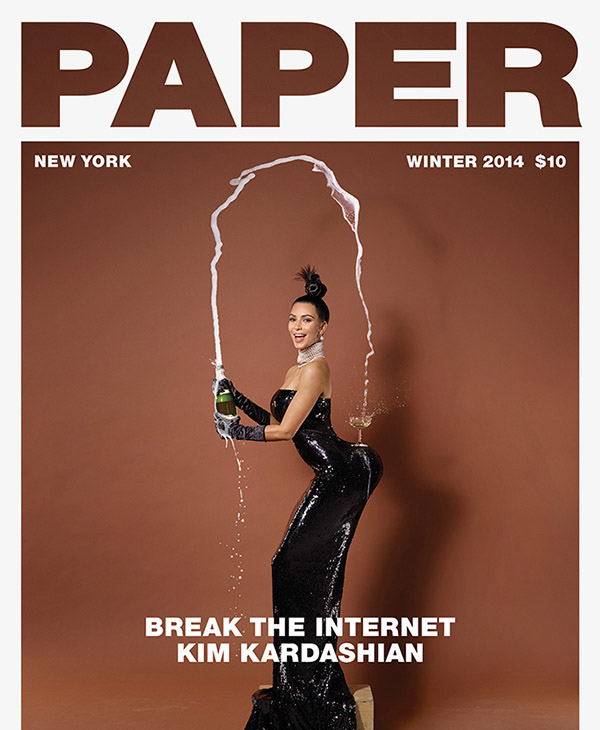
Everyone on the internet has pretty much heard the phrase “Break the Internet”, all thanks to Drew Elliott. He is the mastermind behind Kim Kardashian’s Paper Mag cover that brought in 16 million users to Paper Magazine’s website within two hours. That cover also made up 1% of Google traffic in the United States. He is now the co-owner and chief creative officer of Paper Communications. Business of Fashion, one of my favorite podcasts, brought him on as a guest in their episode called “Inside the Magic and Math of Digital Marketing”.

What I love about this episode is that Drew Elliott is pretty relatable, at least to me. He is a guy from a small town in Indiana obsessed with pop culture. His dream school was NYU – mine, too – and attended when he was 18 at the Gallatin School. He wrote his thesis on the Osbornes, which was a total throwback upon hearing that. When I think of reality families I automatically think about the Kardashians – but really, the Osbornes is the OG.

He began his internship at Paper Magazine while attending NYU. He interned for two years and then worked there for five years. He mentions how slow their dial up internet was when he began working there: the front end of the office was allowed to use the internet in the morning and the back-end of the office could use it in the later day. He then left to work at Ketchum doing experimental marketing, working for big companies like Frito-Lay and IBM, and then came back to Paper to build an agency to contact with big brands and create content. He left again to work for The Audience in Los Angeles and then came back to Paper, once again, with an agenda: to modernize the brand and entertain the consumer.

https://abc7chicago.com/entertainment/kim-kardashian-breaks-the-internet-with-nude-magazine-cover/391881/

He then talks about how Paper’s project with Kim Kardashian “broke the internet”. He says that the element of surprise was a key factor to the success of their cover campaign; there was no build up or teasers. He talks about taking the images from the shoot and using them in different social media platforms, focusing on Kim Kardashian’s status from “celebrity” to “influencer”, and working with different media brands to popularize that concept. He also says that user-generated content (meeemes) from the internet helped popularize the shoot, too.

He defines “influencer” as “someone in the digital world who is an extreme expert in something that they do” and also “just cute”. He also talks about “micro-influencers” as someone who is “able to start a conversation and lend huge credibility” without having a large audience. Elliott says that the days of publishing is gone and creation of content that entertain the audience is the new way of digital marketing, with influencers being a huge part of it.

He then talks about the relationship between “math” and “magic” in digital marketing. By math he refers mostly to data and algorithms, and by “magic” he talks about the content that the audience wants and loves. He says that companies can be too reliant on data and forget how important the actual content is. Companies will lose themselves in the math and paid media trying to reach the consumer instead of putting out attractive content that the consumer will love. He thinks the conversation should be shifted to creating the magic first, then figuring out the math on how to get the content to the consumer. “Break the Internet” was centered around that philosophy.

Overall, I think this podcast was pretty interesting. It was really cool to hear the perspective from the man behind Kim Kardashian’s iconic #BreakTheInternet. What I think the podcast could’ve improved on was a little bit more depth about the relationship between math and magic. I noticed there was no advertising in this podcast. I think it’s because Business of Fashion has an established online presence and isn’t reliant on advertisements to keep its podcasts relevant. However, if they were to bring an advertiser on its podcasts, I think it would be a great idea to partner with Fashion programs to advertise courses, degrees, etc.

Check out Business of Fashion’s podcast with Drew Elliott, titled “Inside the Magic and Math of Digital Marketing” at apple.co/2MKc6LU

Hold Up, Boomer: You’re on Instagram?

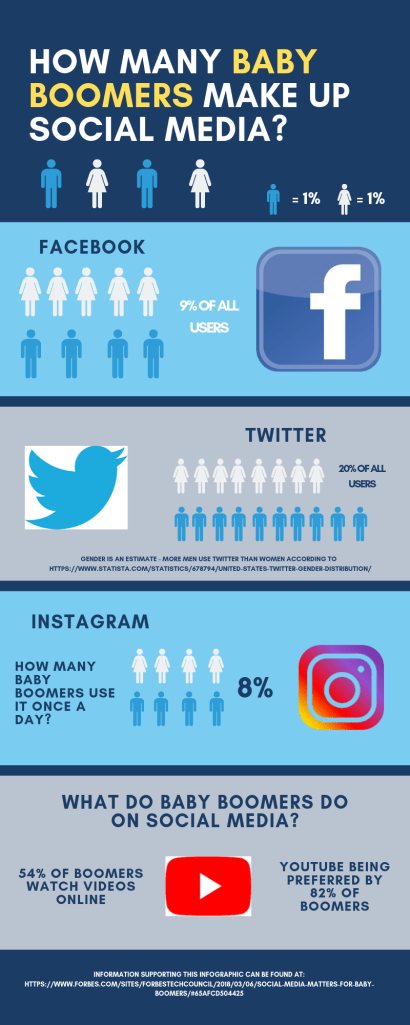
“Boomer”: my favorite passive aggressive way to refer to Baby Boomers. I was trying to figure out a title that wasn’t as offensive as “Shut up, Boomer,” a common phrase on Twitter. Baby Boomers are pretty interesting to me: they prefer cable, still read the newspaper, and are the dominant target market in infomercials. What interests me about them the most is their social media use.

The research found online was pretty predictable: Boomers don’t have a dominating presence online. However, I did find that 20% of Twitter users are 55+, which was pretty interesting find. Twitter a constant stream of information with a plethora of hashtags; while it supports media such as photo and video, it’s much more text based than other social media such as Facebook, which is the social media site most commonly linked to Baby Boomers.

I think Facebook is a favorite among Baby Boomers because not only does it allow them to connect with friends and family in a way that was never attainable to them before, but it is eye candy full of videos, photos, games, and more. This is a visually stimulating way of advertising product and pretty lucrative for companies who deal with weight loss supplements, political campaigns, life insurance, and other Boomers’ interests.

Maybe it’s about time we give the Boomers their credit for being social media savvy, at least in some social media sites.

Ok, So About the Last Blog Post…

I did it completely wrong. To be honest, I’ve been doing this whole class wrong and it’s already the fifth week of class. It’s taken me this long to finally catch up and here I am.

My first blog post was supposed to be about something COMPLETELY else than what I wrote about. I’m thinking about scenarios where I delete the blog post entirely but I don’t think that would fit my erratic online personality. I’ll keep it up, being the good sport I am, and continue with the actual assignment:

Technology in Advertising & Public Relations

It’s interesting to be growing into adulthood during this specific point in time. I’m living in the age where a plethora of information can be accessed at my own fingertips; yet, I find that with this gift comes a lot of distractions. It’s so easy to be sucked into kitten videos while studying or researching online — better yet, I found a thread of tweets today of kids using Animojies and saying cute things like “I love you mommy – woof woof!” while using the dog Animoji. I completely forgot I had been doing productive things before falling down that insanely adorable rabbit hole.

I think companies that are smart with internet advertising realize this. They know that today’s generation of Millennials and Zs have short attention spans. They know how to activate the pleasure signals in the brains of relatively attentive minds with smart advertisements, whether they be interactive mini games or funny videos (the spectrum isn’t defined by those two examples; there’s so many attractive advertisements out there). Sometimes I wonder if I’m going to shell out my morals to work for an advertising agency that profits off the inattentiveness of people my age. I can be cynical about technology, which also makes me wonder if this degree is something that suits me.

However, I think majoring in advertising and public relations is a really smart decision. Virtually every company in the world uses advertising and public relations. As technology advances and we culturally shift from floppy disks to iCloud and beyond, companies get more and more creative with advertising their products and services. With the (n)ever(ending)-so-promising future of VR, which will either be the next dominant platform of technology or not, I wonder what advertising will be like under that tech reign. We can already see with some VR/mixed reality programs – such as those that allow you to tour potential homes or ‘try on’ clothes – we are immersing ourselves even deeper into technology, and who honestly knows how companies will use that to their benefit in advertising/PR? What I know, however, is that no matter how complex and interactive technology evolves in my lifetime I will at least be able to get a job doing something with an Ad/PR degree.

Does that sound like a defeatist attitude? Am I succumbing to a degree just because I know I will be able to make a few good dollars with it?

I’m looking on the bright side when it comes to Ad/PR. I hope – and I am hoping so hard – that companies will use Ad/PR in the very near future (aka, now) to bring attention to the dire situation that is climate change. Millennials and Gen Z are already making an impact to impede the damage; look at the meat and dairy industry who are silently struggling to grasp the loyalty of young consumers who are cutting those things out of their diet either partially or entirely. While I do not wish for their comebacks, I do wish for other industries to do their duty to cut their emissions and be as green as possible and also advertise this to consumers.

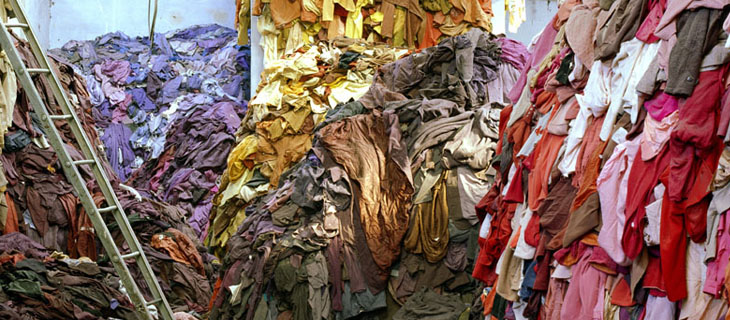
I desperately want the fashion industry to cut back on using synthetic fibers; even only using poly-blends of natural and synthetic fibers would be a good start. And I want these companies to let us know via Ad/PR that they are consciously making these changes. I want to be part of this movement – I want to work for a fashion firm (I’m looking at you Versace, Zana Bayne, Filson’s, etc.) and reach out to the consumers to let them know that we are making a difference. Whether that’s through quirky Twitter posts, Facebook ads, Snapchat shout-outs, or even a VR app that lets you talk to Donatella Versace herself about saving the turtles from eating microplastics, I want to be part of that.

So yeah – that’s the bright side of my Ad/PR mentality. I don’t want to exploit the inattentiveness of internet users for a cheap buck – I want to be part of a movement to save this planet and be environmentally conscious while helping a company remain profitable. Hopefully this degree will let me do just that.

Photo Source: https://sanfranciscosustainablefashionweek.org/